
Outside Days 2026: A Summit Finding Its Urgency
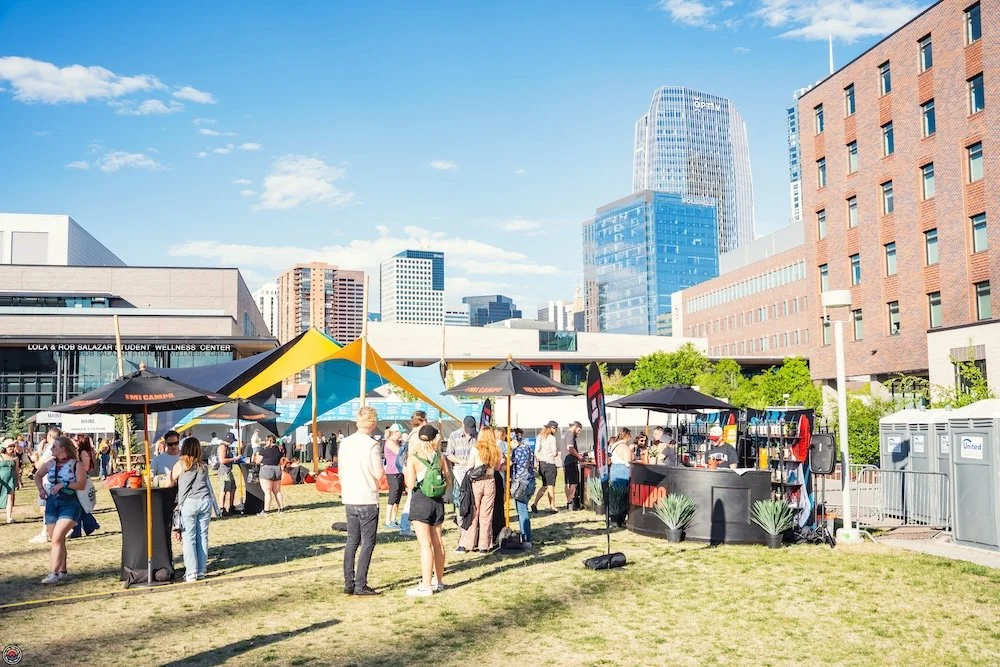
Outside Days has always billed itself as something more than a conference — a "gathering place," in the words of co-founder Robin Thurston, where brands, athletes, policymakers, and entrepreneurs converge to tackle the big questions shaping outdoor recreation's future. In its fourth year, held at the King Center on the Auraria campus in Denver, that ambition finally felt fully realized. What emerged over two days was a summit that had found its thesis: the outdoor industry is no longer fighting for attention. It's fighting for relevance in a world that has made staying inside radically easier than going out.
If there was a single moment that set the emotional register for the entire event, it was Bobby LeFebre's spoken word poem on Friday morning. LeFebre, Colorado's former poet laureate, took the stage before REI CEO Mary Beth Laughton and delivered a piece simply titled — in spirit if not in name — The Cathedral. It opened with a hiker's ascent, the body reduced to sweat and switchbacks, and built into something far more pointed: a diagnosis.
The room went quiet in the way that rooms go quiet when someone says what everyone has been circling around. The poem ended as a call to action: "The cathedral has no walls, no borders, no velvet rope separating people by pocketbook. It belongs to everyone and no one at all." It was the best possible aperitif for everything that followed.
The core intellectual argument of Outside Days 2026 was articulated most crisply by Laughton in her fireside conversation with Thurston. In her first year leading REI, she completed a formal listening tour — stores, distribution centers, vendor partners, members — and came back with an insight that reframed how the co-op thinks about its mission.
People love the outdoors. They understand the benefits. What's getting in the way is real life: busy schedules, phones, and the friction-free dopamine loop of a screen versus the effort of lacing up boots. To underscore the point, Laughton shared early data from a forthcoming American Nature and Health Survey conducted in partnership with the Nature and Health Alliance: 45 percent of Americans are getting less than two hours of time outside per week — below the threshold where the measurable health benefits kick in. Seventy-five percent say they understand the mental health benefits of going outside. Eighty-five percent report feeling better once they're out. But they're still not going.
"It's why I don't think we have a louder inspiration problem," Laughton said. "We have to make it easy. We have to close the convenience gap."
Her practical vision — building an "outside system" that protects public lands, creates local access, and gives people the confidence to use both — translated into specifics: REI's partnership with inclusive adventure travel company Intrepid Travel, its trail cleanup events in 30 cities that filled up within 30 hours, and a forthcoming commitment of an additional million dollars toward national scenic trails on National Public Lands Day in September, with members given a direct voice in where the funding goes.
Governor Jared Polis, who opened Friday with brief remarks, provided useful policy context. Colorado has one of the first and best-funded state outdoor recreation offices in the country; 400,000 jobs and $65 billion in economic activity depend on the sector. His administration has committed to 80 percent renewable energy within four years, partly because outdoor recreation and agriculture — the state's two largest industries — are both climate-dependent. It was a reminder that the political scaffolding supporting the outdoor economy is fragile, and worth protecting.
Thursday's IGNITE pitch blocks were a highlight and, honestly, a calibration. Eight finalists competed across three blocks for a grand prize, a runner-up award, and a people's choice — and collectively they offered a useful cross-section of where outdoor entrepreneurship is actually going in 2026.
Stoke Plastics opened the day with one of the competition's most technically compelling pitches. Founder James has patented a process for breaking down and reforming recycled polymer chemistry that raises recycled content in outdoor plastic products from the industry standard of under five percent to between 25 and 75 percent — achieving performance equivalency to virgin plastic while dramatically cutting carbon intensity. Twenty USPTO claims filed; 18 deemed novel. Current partners include three top global outdoor brands, a premium cooler brand, and a performance apparel company. Purchase orders are tracking toward $12.8 million for 2026, with $25.8 million projected for 2027. Margins of 25–30 percent are strong for a materials business, and geopolitical volatility around petroleum is making them better. For an industry that has long struggled to make sustainability economically coherent, Stoke Plastics felt like a proof of concept.
Veloci, pitched by founder Tyler Struggman — who was shipping shoes by hand from his dorm room just a year before — is solving a binary that has plagued running footwear: you get either a traditional shoe with a narrow toe box that cramps your forefoot, or a minimalist barefoot shoe with an anatomical fit but no heel support. Veloci offers both. The brand launched in January 2025 and crossed $2.7 million in revenue in under eighteen months, currently running at a $3.5 million rate with 120 percent year-over-year growth and distribution across 50 specialty retail partners. The APMA has recommended Veloci to patients. It's a category-creation story, not a product improvement story — and Struggman told it with the clarity of someone who has run out of patience for incumbent brands protecting their legacy margins.
Fuel Goods, pitched by co-founder Laura Jorgensen (alongside national champion co-founder Courteney Lowe), is a personalized sports nutrition marketplace: it ingests your wearable and training data and matches it to specific products from a curated catalog of tested, trusted brands. The insight behind it — that 60 percent of active Americans are confused about what to fuel with despite having access to more data than ever — is real and persistent. Fuel Goods generated 4,000 recommendations at a 9 percent conversion rate in its first phase, and phase two is layering in training data for significantly more granular matching. The business model (retail margins on curated products, not private label) keeps the company's incentives cleanly aligned with athlete outcomes. Fuel Goods took the Runner-Up award.
ilo may have been the most unexpected pitch in the competition. The co-founders are solving a specific and underserved problem: family travel that actually gives parents rest. Their model pairs nature-forward outdoor education — all educators are Reggio Emilia or Montessori certified, with a 1:3 teacher-to-child ratio — with US work-schedule-aligned childcare, offered either as all-inclusive European week-long trips or as "Form Collective" summer camps in US cities. Revenue last year hit $1.4 million across 100 customers. Their spot allocations sell out in under 30 minutes. The waitlist is 17 times their current capacity. Whether ilo is an outdoor company or a travel company or a childcare company is almost beside the point — it's addressing the exact "real life gets in the way" problem that Mary Beth Laughton had named that same morning.
Fuelin, pitched by Jonathan Lee, emerged from a personal moment most endurance athletes will recognize: hitting the wall three miles from the finish of his first Ironman, learning later that a sip of Coke was all he needed. The company builds AI-powered personalized nutrition guidance for athletes — not a tracking app, but a forward-looking recommendation engine built on a proprietary dataset of 30,000 users and 15 years of product development. Four months post-launch, Fuelin was approaching three million paying subscribers at $120–250 per year, with an 82 percent 30-day retention rate that the company described as best-in-class for health applications. Outdoor performance tech is increasingly indistinguishable from health tech, and the moat Fuelin is building is data.
NAKOA Adventure brought one of the most mission-driven pitches of the day. Founded to create outdoor adventures specifically for the plus-size community — and self-described as the only brand in the world doing this across every terrain — NAKOA has been building brave spaces for plus-size adventurers since 2019. The company was recently selected for the Embark accelerator in partnership with REI and Founded Outdoors, which gives the pitch an institutional credibility that matches its moral clarity. The access gap the outdoor industry talks about in the abstract is the gap NAKOA is operating inside.
Traveling Ground — a Denver-based re-commerce platform for high-quality used bikes and components — won the People's Choice award, which felt right. Founder Anton Cariffe has built something deceptively simple: a well-curated, trust-based marketplace for premium used cycling gear, anchored by a community ethos that includes donating a portion of profits to Bicycles for Humanity. In an industry frequently accused of fetishizing newness and pricing out casual participants, a business that democratizes access to great equipment by keeping it in circulation is genuinely countercultural. The crowd felt that.
LymeAlert took the Grand Prize, and it's hard to argue with the decision. Founded by MIT innovator Erin Dawicki, LymeAlert has developed a patent-pending at-home test kit that detects the presence of Borrelia burgdorferi — the bacterium that causes Lyme disease — directly in a tick, with results in about 30 minutes. The three-step process (crush, mix, test strip) requires no lab, no waiting, and no guesswork about whether to seek prophylactic treatment after a bite. Lyme disease is one of the most common vector-borne illnesses in the country and one of the most frequently misdiagnosed; the window for effective treatment is narrow. LymeAlert closes it. The company is entering beta production now and preparing a seed round to build a multiplexed version capable of detecting multiple tick-borne pathogens from a single sample. If the IGNITE competition is supposed to surface ideas that could meaningfully change people's relationship with the outdoors, getting more families to spend more time outside without fearing a tick bite that goes undetected for weeks seems like exactly the right kind of problem to fund.
One of the more textured conversations of the summit happened Friday morning in the Recital Hall, where a panel moderated by Ariana Ferwerda unpacked the relationship between outdoor aesthetics and participation. The central argument — that style is not downstream from performance, it's a gateway to it — had been implicit in the outdoor industry's recent evolution (the Salomon city runner, the Arc'teryx streetwear moment, the entire DTC trail of the 2010s), but it rarely gets examined directly.
The panel's key insight was demographic: style and identity are how younger and more diverse audiences come to outdoor activities. If the gear looks and feels like it belongs to someone else's lifestyle, no amount of access infrastructure will move the needle on participation. Getting people to see themselves in the category before they're ready for the category is the unlock.
The summit saved its most charged session for last. "Progress Demands Action: What's Your 5-9?" brought together Annie Leonard (former Greenpeace USA Executive Director), Tennessee State Representative Justin J. Pearson, and Patagonia CEO Ryan Gellert for a frank assessment of the political moment and what it demands from outdoor industry leaders.
Pearson — who has become one of the most visible environmental justice voices in the country after his expulsion from and reinstatement to the Tennessee House — was unsparing. He framed the current moment as "the rise of a new Confederacy," an attempt not to separate from the country but to capture its institutions in ways that relegate certain communities to second-class standing. He connected the erosion of Black political representation directly to environmental outcomes: the voices most proximate to environmental harm, he argued, are being systematically removed from the rooms where environmental policy is made. The Elon Musk-backed gas plant being built illegally in his Memphis constituency was not an abstraction; it was the headline.
Leonard's framing was complementary: a healthy democracy is a precondition for a healthy environment. The outdoor industry, she argued, has extraordinary reach, resources, and profile — and the responsibility that comes with it. Gellert's presence implied Patagonia's ongoing bet that brand activism and business performance are not in tension.
The session was uncomfortable in the way the best conference sessions are: it asked the room to do more than align values and write checks to land conservation organizations. It asked whether outdoor industry leaders were willing to show up on the harder political terrain that environmental protection now requires.
What none of the attendees could have anticipated was that footage from this very panel would become a flashpoint in one of the outdoor industry's most viral stories of 2026. Patagonia CEO Ryan Gellert — speaking at Outside Days on May 29, months into the brand's ongoing trademark infringement lawsuit against queer climate activist and drag queen Pattie Gonia (real name Wyn Wiley) — told the crowd that Patagonia was "not trying to silence somebody" and had sought dialogue with Wiley over her trademark application for the name "Pattie Gonia" covering apparel, events, and marketing. The clip circulated widely. Two days later, on May 31, Pattie Gonia publicly disputed Gellert's account, stating that the first contact she received from Patagonia after filing her trademark was a lawyer's email announcing the lawsuit had already been filed — not an invitation to talk. The Patagonia vs. Pattie Gonia trademark lawsuit, originally filed in January 2026 and alleging a violated 2022 commercial restriction agreement, escalated sharply from there: Patagonia published a public list of settlement demands on June 1 — including withdrawal of all trademark applications and a ban on selling or promoting apparel as Pattie Gonia — which Wiley rejected the same day. Her counter is simpler: she drops the trademark application, they drop the lawsuit. That Outside Days video, intended as a defense, became part of the public record that fueled the backlash.
Four years in, Outside Days has developed a genuinely distinctive character. It has the industry convening function of OR, the cultural ambition of SXSW, and an increasingly sophisticated sense of the policy and civic dimensions of the outdoor sector. The IGNITE pitches give it energy and capital formation. The spoken word and musical programming give it soul. The fireside formats — small enough to be candid — give it substance.
The through-line of the 2026 edition was clearer than at any previous iteration: the outdoor industry can no longer simply be the place that sells people on nature. It has to be the system that removes the barriers between people and nature — gear, confidence, access, politics, and yes, the small daily design choices that make stepping outside feel easier than reaching for a phone. That's a bigger mandate than the industry has historically accepted. Outside Days 2026 made the case that it's the only one worth having.
Photos by: Bryan Rothman