The Maine's Garrett Nickelsen talks Joy Next Door, 8123 Fest, & Much More
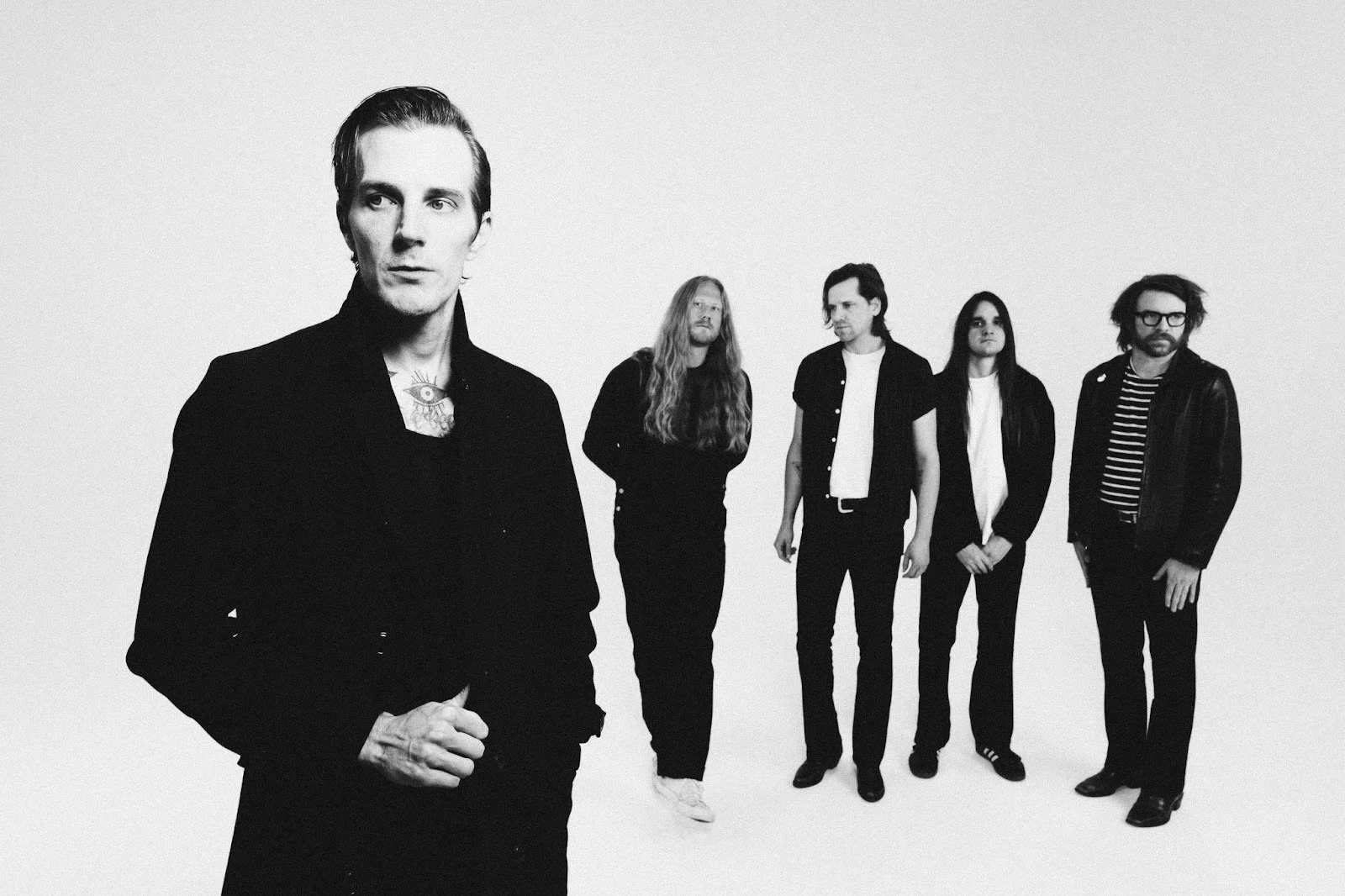
Fresh off the release of their newest record, Joy Next Door, one of our absolute favorite bands of all time The Maine is back and better than ever. With a tour planned and on the way (tickets here!), we got the unique opportunity for a lengthy Q&A with the band’s own Garrett Nickelsen. Make sure to check out the record and head to a date, but also to learn a little more about the album and the band’s storied history below.
WWAM: You’ve always treated albums like full worlds rather than just collections of songs, but with Joy Next Door being written and recorded in sequence, did that change how you approached storytelling compared to past records?
Garrett Nickelsen: It actually wasn’t written in sequence. The songs came out naturally over the course of about two years, and the early batch of material had a really different vibe. We even put out a single called “Touch” that leaned more into this dancey, early 2000s indie feel.
Then John wrote “It’s Not Over Yet” while he was in Nashville, and that song completely shifted the direction of the record. There weren’t even lyrics yet, but the confidence in the way he was singing, the structure of the song, the overall feeling of it it kind of turned everything on its head. It felt like, “Okay, this is the emotional lane we should be heading down.” That song really became the key that unlocked what the rest of the record would become.
It wasn’t until pre production that the story of the album really revealed itself. Once we started sequencing everything, we became very focused on the emotional arc and the flow of the record. It started feeling less like a collection of songs and more like a story or a feeling being carried throughout the whole thing.
A lot of the record deals with nostalgia and what it feels like being in your mid 30s, having families, watching life change so much around you.
WWAM: You’ve been a band for nearly two decades, which in modern rock almost feels like mythological longevity. What do you think you understand about yourselves now that you didn’t during something like American Candy?
Garrett Nickelsen: American Candy was a huge turning point for us. In a lot of ways, it felt like starting over. It was our fifth album, and at the time it honestly felt like we were either going to figure out how to keep doing this long term, or maybe that was going to be it.
That record ended up setting the path forward for everything we’re able to do now. It gave us a huge amount of confidence creatively, and I think we’ve tried to hold onto that confidence ever since. Obviously there have been ups and downs through the years, but one of the biggest lessons that era taught us was that you really just have to trust your gut and make the songs that genuinely excite you.
What’s been cool with this new record is seeing people gravitate toward songs I wasn’t even sure people would connect with. That’s always a reminder that the most important thing is making something that feels honest and emotionally real to you first.
WWAM: You’ve built one of the most organically loyal fanbases in alternative music. Looking back at the early days, did you have any sense that this slow-burn growth would become your defining story?
Garrett Nickelsen: The slow burn was always the goal it’s just funny when you’re 20 years old referencing bands like Tom Petty or Wilco and talking about having a long career, because you don’t really understand the ups and downs that come with that yet. You just have to believe that longevity is the thing you actually want.
There have always been bands that explode overnight and then panic the second things cool off a little bit. I think because we’ve experienced so many highs and lows over the years, we’ve learned to understand that growth isn’t linear. When big moments happen, they’re exciting, but you also know they won’t last forever, and that’s okay.
The fact that our biggest tour ever happened nearly 20 years into our career is honestly wild and incredibly rewarding. It brings a fresh sense of excitement and energy to everything we do.
We’ve always wanted to do things our own way, and that’s not always the easiest path, but when it works emotionally, creatively, artistically it’s the most fulfilling thing imaginable. I always joke that we’re kind of like a working class band. We didn’t win the lottery overnight. We’ve spent years building this thing piece by piece, trying to get better every day, and I think there’s something really meaningful about that.
WWAM: The title Joy Next Door suggests something close, almost reachable. Do you see this album as hopeful, conflicted, or something that exists in between?
Garrett Nickelsen: It definitely exists somewhere in between. There are moments of hope throughout the record, but there’s also a lot of uncertainty and darkness in it too. John’s talked a little about how a lot of these songs are him asking questions that don’t necessarily have answers.
That balance is really what life feels like to me. There’s joy, but there’s also defeat sometimes. There are moments where you lean into the darkness, and moments where you’re able to step back and see the beauty in things again. So it’s not really a “happy” record or a “sad” record it lives in that in between space, and I think that’s where most people actually exist emotionally.
WWAM: We have heard that when you recorded Joy Next Door, you all used your favorite indie films scores as a blueprint, and inspiration for the album. Going from album sequencing to essentially scoring a “film,” what indie movies did you all use as references?
Garrett Nickelsen: There wasn’t a specific list of films we were studying or anything like that, but early on I did this fun experiment where I took clips from movies that really impacted me emotionally and filmed them on my phone. Then I started laying some of our demos underneath those scenes to see how the music changed the emotional weight of the moment.
Score is such an important part of some of my favorite films, so it was a cool way of visualizing what the songs were trying to communicate emotionally. Garden State was definitely a huge reference point for all of us. To me, it’s kind of the perfect indie film, and the soundtrack is incredible.
A lot of it was less about directly referencing specific movies and more about using the emotional arc of films as inspiration for sequencing the record differently. Normally when you’re making an album, you can get so caught up in every little musical detail, but bringing a visual element into it helped us focus more on feeling and atmosphere.
WWAM: We all know the notorious set list divas get roasting (mostly Pat) on Twitter about which songs you choose to play each night. With over 200 songs to pick from, there’s bound to be one you can do without that everyone asks for. You don’t have to name names… but also please name names.
Garrett Nickelsen: That’s hard, because I genuinely don’t dislike any of our songs. If somebody has a favorite song we don’t play, I’d never want them to feel like we don’t care about it. Honestly, sometimes people yell out requests during the show and we’ll just try to figure them out on the spot, and that actually makes things really fun because there’s less pressure on it.
There are definitely songs from certain eras like some of the Black & White stuff that we may never play again, or maybe never even played at all. But even random things like the Akon cover get shouted out sometimes, and we’ll all look at each other trying to remember the chord progression in real time.
The funny thing about making records is that when you’re creating something, you’re 100% confident in the choices you’re making at that moment. It’s only years later that you sometimes look back and think, “Maybe that wasn’t the best idea.” But honestly, 99% of the things we’ve done, I’m still really glad we did.
So if someone wants to hear something, we’ll always try. It just depends whether our brains still remember how to play “Jenny” from Pioneer that night.
WWAM: I think there is a lot of discourse in the world as of late around slept on albums from bands as bands start to get bigger, and their discography naturally grows. Is there any album of yours where you’re like ‘this was really good and nobody talks about it enough?
Garrett Nickelsen: I don’t know if there’s a whole album I’d call underrated, but there’s definitely a song called “Good Love” that means a lot to me personally. It came from the Pioneer sessions we recorded something like 29 songs during that era and split them across a bunch of different releases.
“Good Love” felt really special when we wrote it because it was one of the first times where it truly felt like anything was possible creatively. It was kind of our first step into experimenting more with structure, mood shifts, dynamics all those things that eventually became a huge part of our identity as a band.
I don’t hear people talk about it very often, but it’s one of my favorite songs we’ve ever done. Maybe part of that is just because of what making it meant to me personally at the time, but I still love that song.
WWAM: Speculations have started about 8123 fest 2027. I know you can’t confirm or deny it happening, but for fans who are starting to get excited at the idea of it happening again, could you share any prior insight that may give fans a laugh about past fests? Any chaotic behind-the-scenes moment? Anything that almost went completely off the rails that you’ve never really talked about?
Garrett Nickelsen: Yeah, Fest will happen in January 2027. We’re still figuring a lot of things out, because it’s such a massive weekend for us and there are a million moving parts behind the scenes.
Honestly, every year something almost goes off the rails. Weather is always a huge factor because everything’s outside. The first year was freezing, then another year ended up being way hotter than expected. You’re basically gambling with Arizona weather every time.
The production side of things for the 18 year was probably one of the biggest challenges we’ve taken on. We had these massive LED walls, and me and our friend Carlos created all of the video content ourselves, which took forever. But it was really rewarding because it gave us another way to tell an emotional story visually instead of only through the music.
That’s one of the things I love most about Fest it’s not just concerts, it’s trying to create a full experience. But taking over an entire city for a weekend is definitely chaotic. Thankfully after doing a few of them, we’ve learned what works and what doesn’t. It’s never easy, but it’s always worth it.
WWAM: You’re heading into your biggest tour yet with I Love You But…I Chose The Maine. How does a record like this translate into a live setting compared to the recorded versions?
Garrett Nickelsen: We actually just finished the tour about a week ago, and the whole experience was insane in the best way. Early in the tour we were mostly playing “Die to Fall,” “Palms,” and “Quiet Part Loud,” but halfway through we started throwing “Green” into the set, and that song really came alive live.
It’s one of the first times where I feel like the live version might actually hit harder than the recording. In the studio you can make things sound huge and polished, but there was something about playing that song in a room full of people that made it feel even bigger emotionally.
We opened with it in Washington, DC one night, and I think it totally shocked people. It just felt massive and exciting.
We’re also about to head into another run called The Tour Next Door, which is more of a B-market tour, and we’re doing two separate sets every night. The first half will be more stripped down and acoustic, while the second half will be full band rock songs. I think that format is going to be really fun for this record because it shows how dynamic it is. A song like “Joy Next Door” could work perfectly in the quieter set, while something like “Half a Spark” can hit really hard in the second half.
We’ve also been experimenting a lot more live in general. Jared’s playing piano on “Quiet Part Loud,” which he’d never done before, and we’ve all been trying different instruments and arrangements. It’s been really exciting creatively, and people seem to be responding to it.
WWAM: What still excites you about being in The Maine in 2026 that maybe wouldn’t have excited you in 2008?
Garrett Nickelsen: Honestly, the fact that we still get to do this at all is the most exciting thing.
The ability to keep experimenting and trying things that feel uncomfortable or new is such a cool feeling. Like, playing synthesizers on stage instead of bass in 2008 I wouldn’t have even considered that possible. Back then keyboards looked like a completely different language to me. Now I can actually sit down with one and understand what’s happening, and that’s exciting.
The coolest part is that we’re still learning. We still want to make better songs, put on better shows, experiment with new instruments, try different approaches all of that keeps the band feeling alive.
In 2008 I don’t think I even realized that kind of growth was possible. But now I think experimentation gets more exciting as you get older, because you’re less afraid of failing and more interested in discovering something new.